


The Coast of the Sirens
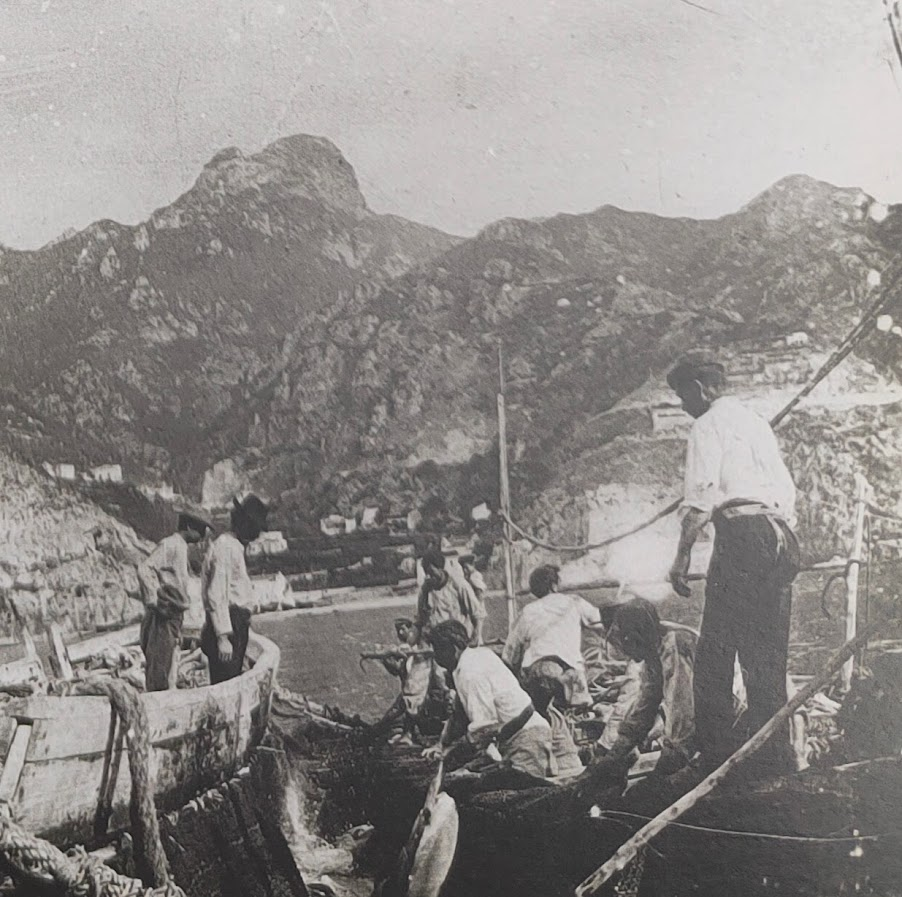
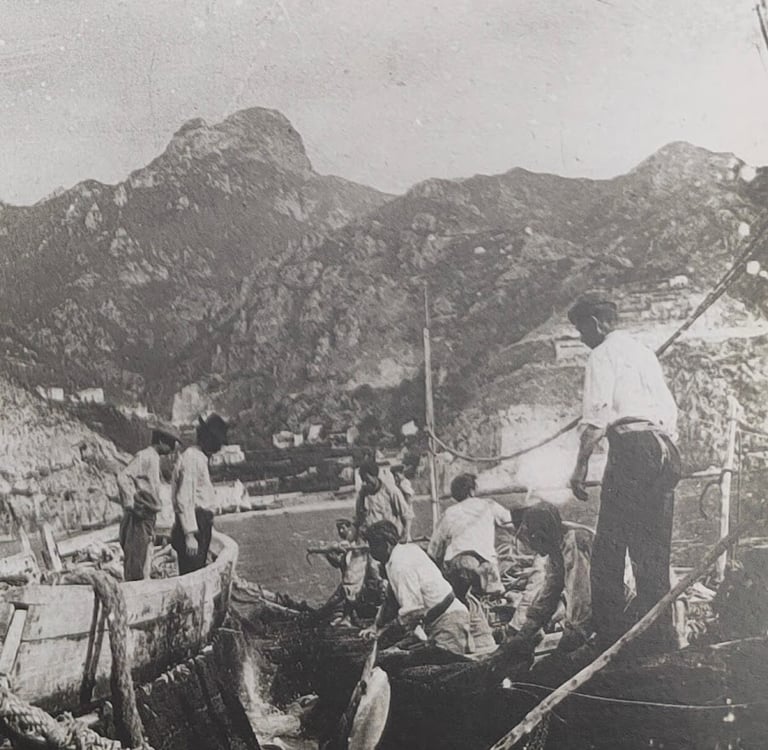
19th century photographs of the Coast of the Sirens, the Amalfi Coast from Vincenzo Proto's book. Who were these people? Some questions have no answer. Only silence.
MEMORY
Antonio Pappalardo
10/18/20252 min read
I Wonder Who They Were
I ask myself often, looking at these photographs.
I wonder who they were. What their names were, where they were going that morning, whether they knew someone would be looking at them a century later. Probably not. They were just living — pulling in nets, carrying baskets on their heads, laying pasta out to dry in the sun in front of the factory, rowing toward shore with Amalfi behind them.
And yet here they are.
I found at home a copy of La Costa delle Sirene, a book by Vincenzo Proto published in the 1960s, collecting images of the Amalfi Coast dating back to the mid-1800s. Real photographs, black and white, with the grain of time pressed into every frame. Not postcards — testimonies. Moments that someone had the care to stop, and that Proto had the care to gather before they were lost.
I brought some of those photographs to life, letting artificial intelligence reawaken their breath — like an ancient whisper rising back into the light from the silence of time. You can see them here.
I live in Amalfi. Every day I walk through the same alleys where these people lived. I pass under the same arches, look at the same sea, smell the same salt the wind carries from the same direction. And yet between me and them lies an abyss of time that no photograph can truly bridge.
Or maybe it can.
There's something strange that happens when you look at a historical photo of the place where you live. It's not nostalgia — you can't be nostalgic for something you never lived. It's something more subtle. The feeling of being part of a story longer than yourself, of being one link in a chain that begins long before you and continues long after. That woman with the basket on her head was walking on the same stones I walked on this morning. Those fishermen were pulling nets in the same sea I see from my window.
They didn't know about us. We know about them — and that gives us a strange, almost silent responsibility. Not to waste the place that has been handed to us. To truly live it, not just inhabit it.
Giusy sells ceramics in Amalfi. Ceramics made with the same techniques that the artisans of this coast have passed down for centuries, handed from one pair of hands to the next like something precious. When I look at them, I think of all the hands that came before. Of all the stories held inside an object that seems simple.
Maybe that's why I take photographs. Not to stop time — time doesn't stop. But to add one frame to this very long story. To say: we were here too. We looked at this sea too. We tried to understand what it means to live in a place like this.
I wonder who we were, someone will ask one day.
Info
Antonio Pappalardo
Amalfi (SA)
VAT Number: 05584500655
© 2026. All rights reserved.